My personal experience. This short but poignant journey invites you to walk the thin line between life and death.




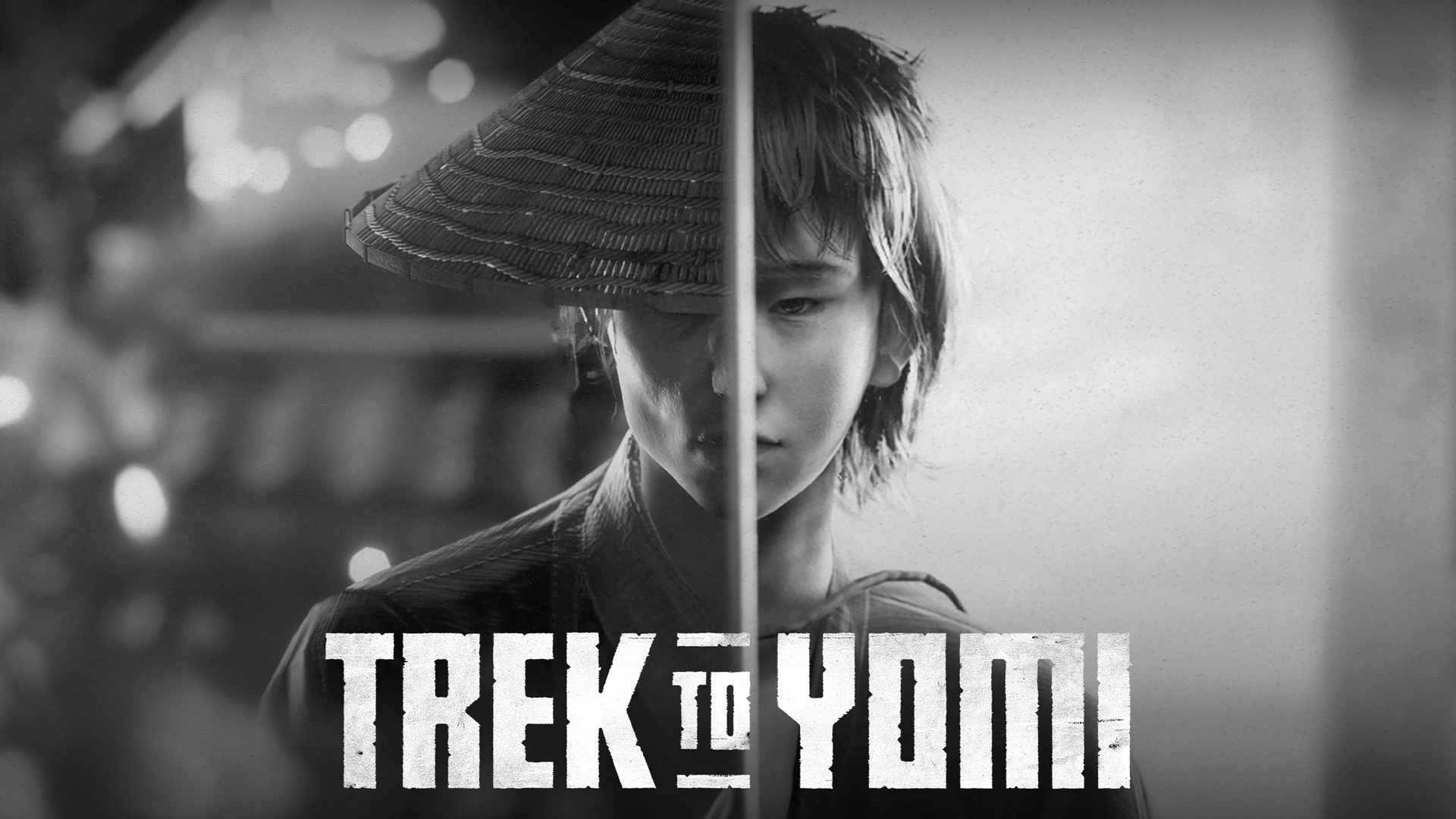
Image credit: Promotional art for Trek to Yomi (Flying Wild Hog / Leonardo Menchiari).
Source: Epic Games
Summary
- Name of the game: Trek to Yomi
- Launch date: May 5, 2022
- Developer: Flying Wild Hog
- Publisher: Return Digital
- Platforms: PlayStation 4, PlayStation 5, Xbox One, Xbox Series X/S, PC, Nintendo Switch
- Genre: Action, adventure, side-scrolling cinematic samurai
- Context: Feudal Japan, with a strong inspiration in the classic cinema of Akira Kurosawa.
History and narrative
You play Hiroki, a young samurai sworn to protect his village and the people he loves. However, after a devastating bandit attack, he loses everything. From there, he begins a journey that goes beyond life and death, facing physical enemies, moral and spiritual dilemmas.
The narrative is simple to follow: the village is attacked, you are the protector and after the tragedy, you embark on a path full of symbolism and decisions. There are three possible routes that influence the end of the game, although the changes are not radical, they focus more on character development than on world alterations.
The dialogue maintains a well-crafted tragic tone, and while the supporting characters are functional, they have a limited role. The world feels authentic and full of symbolism, though fairly linear. It's not a revolutionary or unforgettable story, but it does manage to offer a thoughtful and interesting experience.
Gameplay
Combat is side-scrolling, focused on the use of the katana, with parry mechanics, blocking and directional attacks. You also have additional weapons such as bo shurikens, a bow and a gunpowder weapon. There are light exploration sections that allow you to find ammo, health upgrades and collectibles. While these areas are not extensive, they are worth the occasional detour.
The controls are precise in general, although they can feel a bit stiff in moments of advanced combat. The input system can glitch slightly when there are many animations on screen, which affects the execution of parries in tense situations.
It has a friendly learning curve for beginners. Within minutes you understand how to play. However, on higher difficulties, the timing must be almost perfect. Despite how short it is, the combat tends to get repetitive. There is a variety of enemies, but the mechanics remain very similar throughout the campaign. The boss fights stand out, which offer interesting moments and manage to break the routine of the gameplay a bit. The checkpoints, which are small sanctuaries, are useful for saving progress and recovering health.
Replayability is low. Although there are alternate routes and decisions that affect the ending, they don't motivate enough to play a second time.
Graphics and visual design
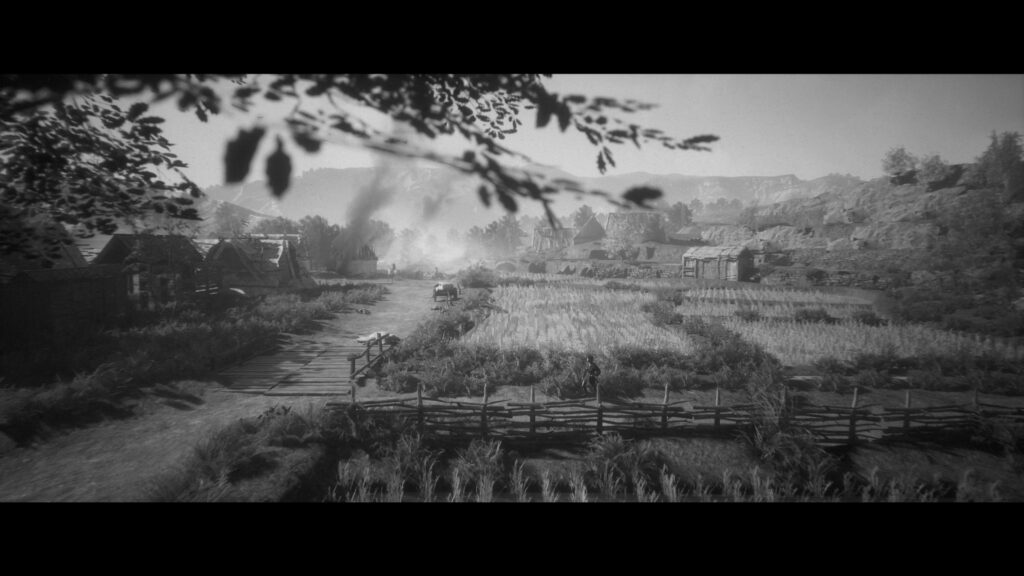
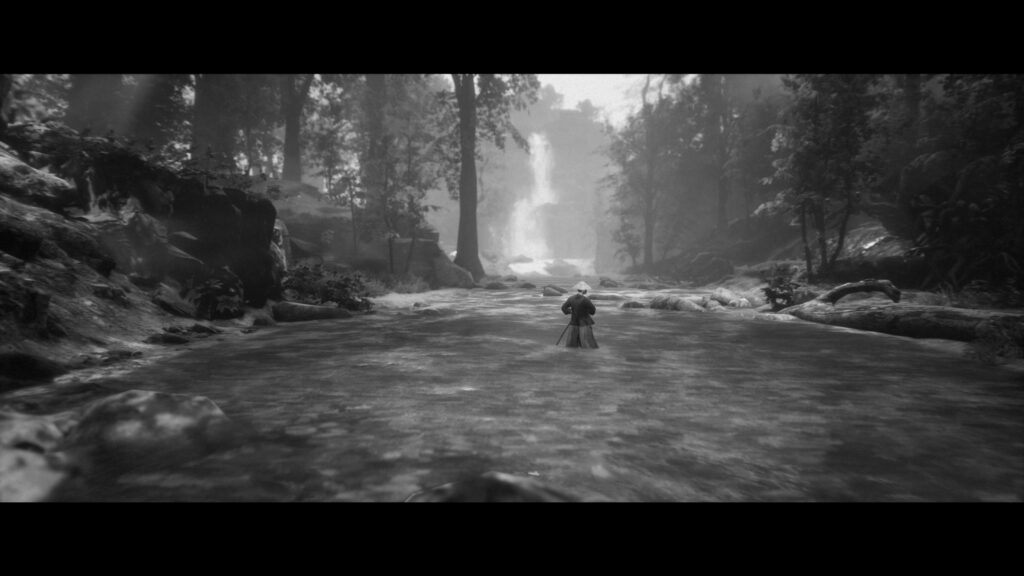
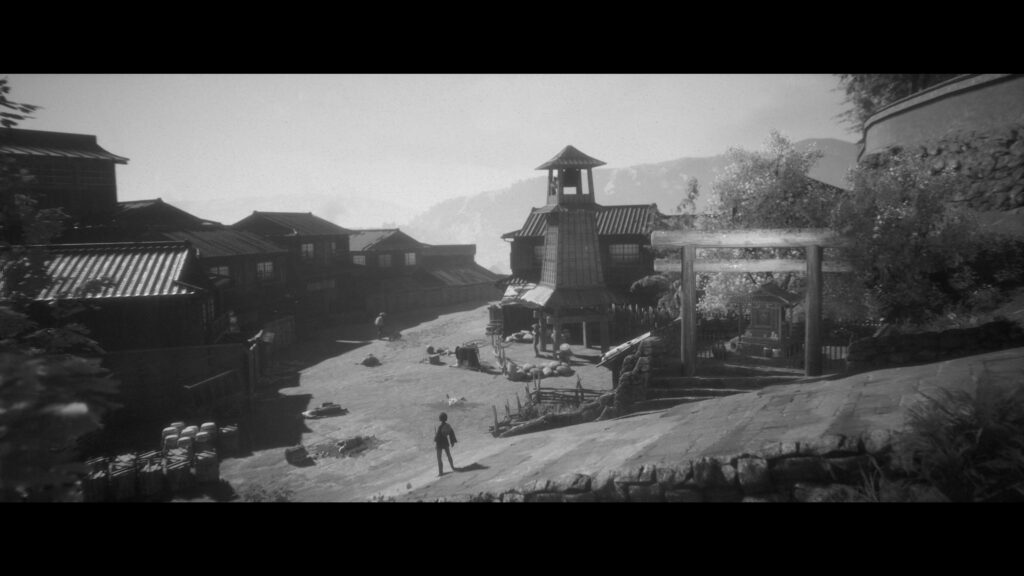
Although it is not a state-of-the-art title in technical terms, its art direction is spectacular. The game is completely in black and white, clearly inspired by the samurai movies of the 50s and 60s.
The fixed framing and visual effects achieve a very marked artistic identity. Textures and animations are functional, though not outstanding. The visuals elevate the overall experience, making the game stand out from other indie and mid-range titles.
Sound and music
The soundtrack is composed of traditional Japanese music, emotional and very well integrated with the events of the game. The sound design is immersive: steel, rain, wind, all contribute to create a dense and dramatic atmosphere.
The Japanese dubbing is excellent. The performances are restrained and realistic, elevating the tragic and emotional tone of the story.
Difficulty and accessibility
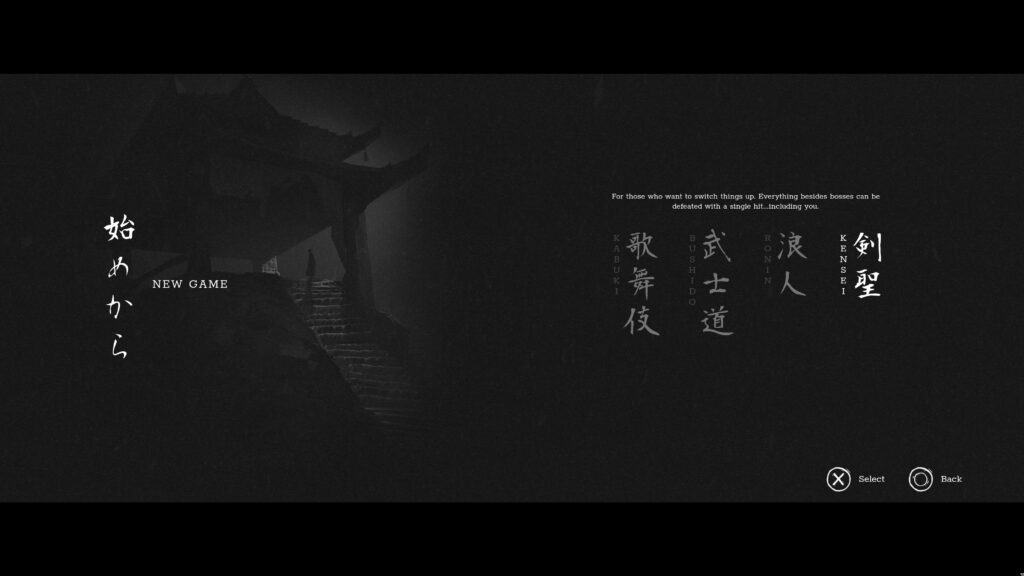
The game offers three levels of difficulty. Normal mode is accessible, while hard presents a real challenge without being unfair. It punishes mistakes, but has no unbalanced peaks.
In terms of accessibility, it's very basic. You can modify the text size and change the language of the subtitles, but there are not many options beyond the minimum expected nowadays.
Additional content
The main campaign lasts between 4 to 6 hours. In my case, I completed it in 4 hours. Being so linear, there are no side activities that extend the duration much. There are three possible endings, but other than that there is no additional content or expansions announced.
Technical Aspects
Performance on PC and next-generation consoles is excellent. On PS4 and Xbox One there may be FPS drops in scenes with a lot of visual load, but nothing serious. During my experience I only found two minor bugs, both fixable by restarting the checkpoint. Overall, good optimization and technical polish is noticeable. Load times are fast and the game flows well on medium sized computers.
Value for money
The game at the time cost around $20 USD, which seems to me an adequate starting price, personally for what the game offers in terms of experience, duration, quality and others, I think you can get it for much less taking into account how many games are on the market at that price and if you compare them, maybe 20 dollars is not worth it, I would say that 10 dollars is very good for this title.
Trophies / Achievements
- Platinum obtained: No
- Percentage of trophies: 29%
- Estimated time: 8-10 hours
- Platinum difficulty: A 4 out of 10. Requires finishing the game on hard and seeing all 3 endings. The advantage is that the game is very short, so even though the difficulty is difficult being so short helps it not to be so heavy.
Conclusion
Trek to Yomi is a game inspired by classic samurai cinema, more of an audiovisual experience than a traditional action game. Its art direction and atmosphere make it a short but striking journey. Although it is not perfect and its gameplay does not innovate too much, it is worth it for those who are looking for something different, artistic and with soul.
My final rating for Trek to Yomi is:
3.2/5

