

Nioh 2 is a sequel very similar to its predecessor, it tries to innovate, but it is still very similar to Nioh.




Image credit: Promotional art for Nioh 2: The Complete Edition, released by Koei Tecmo Games.
Source: Epic Games Store
Summary
- Name of the game: Nioh 2 Remastered
- Launch date: February 5, 2021 (Remastered version for PS5 and PC)
- Developer: Team Ninja
- Publisher: Koei Tecmo
- Platforms: PlayStation 5, PlayStation 4, PC (Steam)
- Genre: Souls-like
- Context: Direct prequel to the first Nioh, also set in the Japan of the Sengoku period. It includes a new story with supernatural elements of Japanese folklore and the possibility of creating your own half-human, half-yokai character.
History and narrative
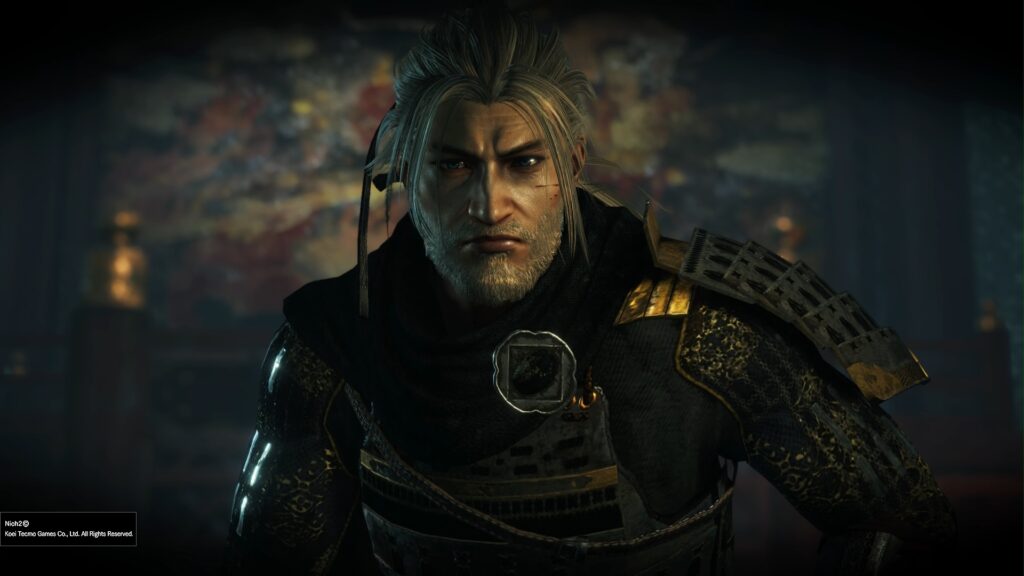
The story of Nioh 2 is more complete and with more details than its previous game, however, it is still a bit difficult to understand in the sense of understanding the characters and who they are. The plot is simple to follow and is pretty much the same as Nioh, it is better developed and has more depth, plus in the end it is about chasing an ancient yokai named Otakemaru that threatens the world. In Nioh we were chasing an alchemist, here it's a yokai, but there are some changes in the story that make it not the same development.
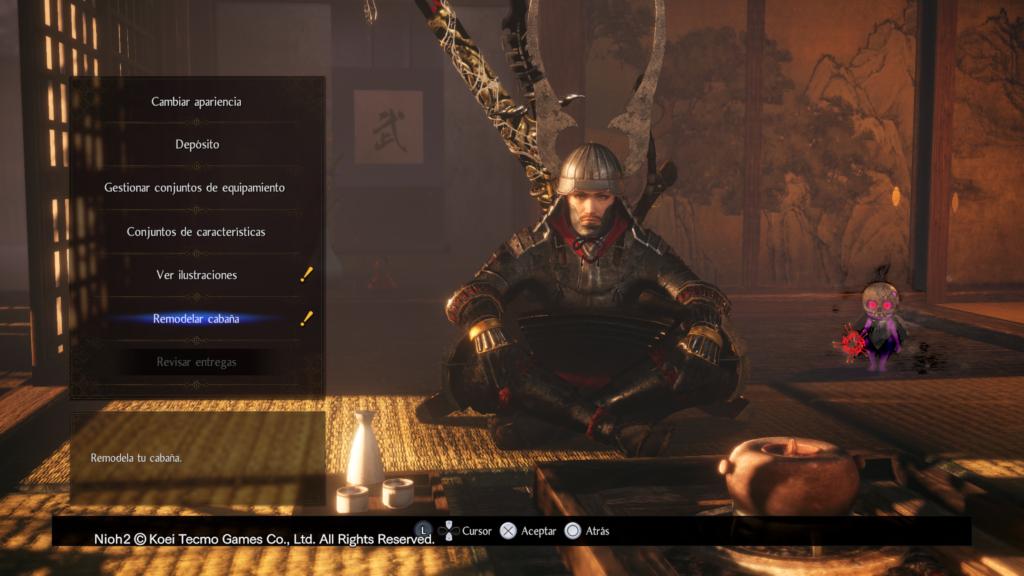
In Nioh 2 we create a customizable character who will later be called Hide. At the beginning we are a nameless, but then we take importance in the world and we are called Hide, which is a being half yokai and half human, which makes him more attractive and gives him more skills for combat, besides being more powerful.
We meet historical figures like Tokichiro, whose goal is to find spirit stones and see them as a collection with the power of the Amrita, which is basically the source of power and what helps us level up. The idea of the game at the beginning proposes more to support Tokichiro with his goals, however, later it changes towards a chase of the yokai all over Japan.
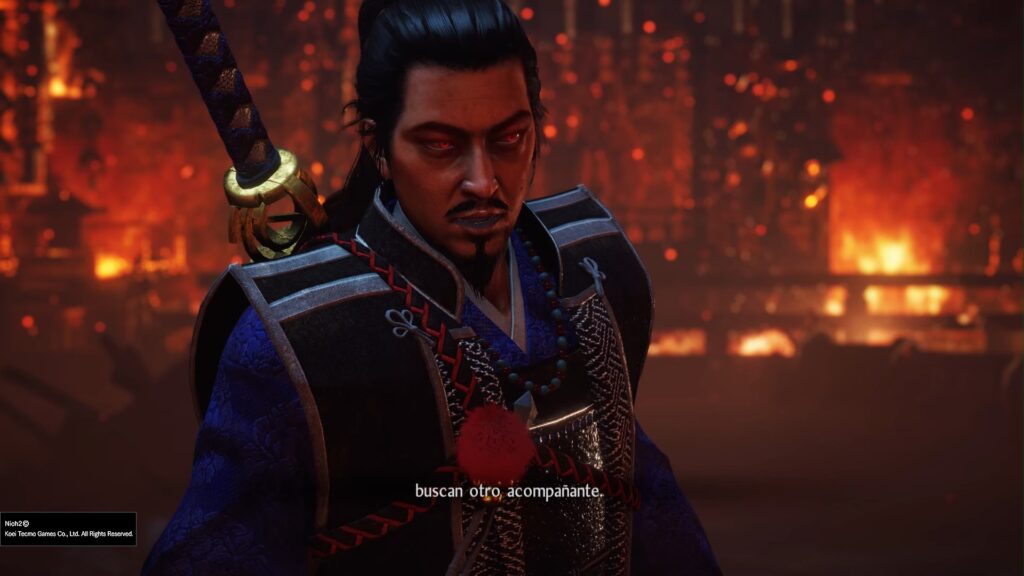
The game is a prequel up to 40 years before the story of Nioh with William, so we see notable characters such as Nobunaga, who was a boss that appears near the end of Nioh and was very powerful. I consider that the characters, dialogues and world building are much better developed than in his previous game; it became more interesting and understandable to me, since the game takes its time through cinematics to explain what happens and, if you pay attention to the dialogues and learn the names of each one which can be confusing, it really entertains at a narrative level. Of course, it's not its main point or focus.
Although, if you've played both games, you'll understand a bit about the feudal era of Japan. Not to the point of being an expert, but it serves as an introduction to the subject. Our character Hide can't speak, which would have been more interesting if he did to give more life to the character and not be the typical protagonist who is only born to fulfill a single objective, but to go beyond that. Tokichiro becomes an interesting character at the beginning, then somewhat annoying around chapter 3. Omyo was Hide's best and most interesting companion, giving him a clearer purpose in this world.
Overall, I think the story is much improved and the character development as well, however, it's still not something very prominent of the game and it's not its main focus, as far as it can be understood. Although I think that, being a game that combines real historical events with some fantasy, it would be nice if they expanded these events more to make the player feel more connected to what is happening, mostly because of the length of the game, as it can take you hours to get to see a story cinematic.
Gameplay
The strong point and focus of the game. Nioh 2 expands and improves what was seen in the first Nioh, although its improvement is more linked to new mechanics and combat options than to something really very innovative, that is, yes, it is practically the same as the previous game. The three stances are maintained: low, medium and high. In my case, I share with you that I only used the medium and high, and that was enough for me. Each enemy is weaker against one stance than another, but in the end, regardless of which one you use, you can defeat the enemy without any problems.
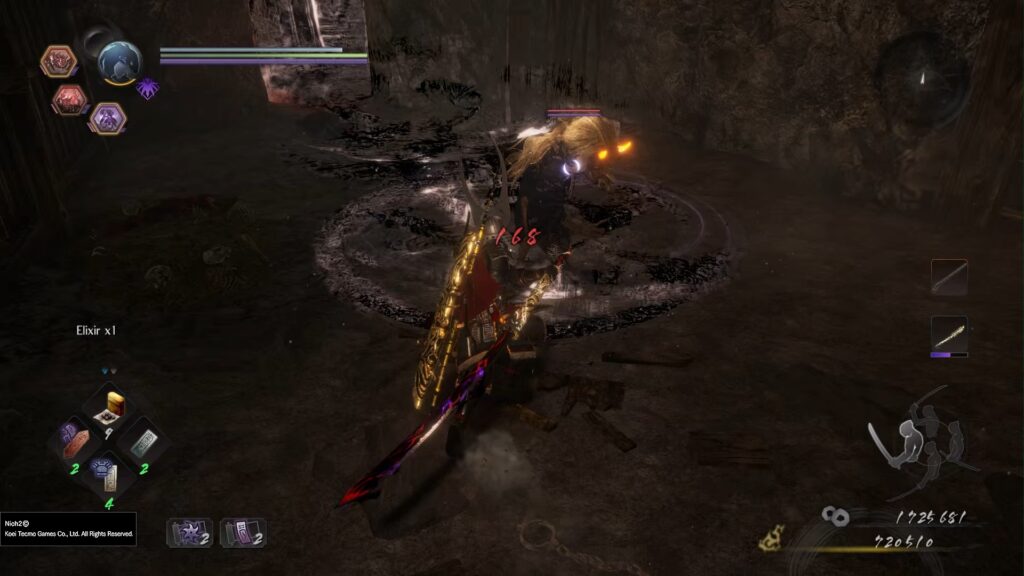
Ki management is now more fundamental, use it and take advantage of the Ki pulse skill. I say this because they incorporated a new mechanic in combat. The yokai, which are the strongest enemies, usually leave a circle on the floor that reduces the charge of your stamina, slows it down, and we know that in these games if you run out of stamina you are dead. Well, what they incorporated now is that there are dark worlds, where the yokai can put you in a specific area; no longer just in that small circle I mentioned, but now there are large areas with this effect. It doesn't sound bad in practice, on the map and fighting small enemies or intermediate yokai, but the problem with this new mechanic is in the boss fight, which here I did consider it unfair.
That's why in Nioh you must know how to use everything the game offers you, without shame to use less than honorable mechanics; forget that because the game is unfair when it wants to be. Bosses that pull you into that dark world and your Ki bar charges too slowly... to me, this is a cheap way to complicate a fight against enemies, because if it weren't for this, the game's bosses would be a hell of a lot easier.
Also, the bosses feel like they have a lot more life. Each fight can take about 4 minutes on average, but not so much because of the difficulty, but because each one really does have a huge life bar. These details make the gameplay feel a bit more heavy than fun. And don't get me wrong, this doesn't mean that the fights are bad, just that they are cheap resources of the developers to avoid the hassle of designing a more strategic and skillful combat.
This also happens with normal enemies. It's exaggerated the amount of life a single enemy has, and I start with the jellyfish, which were the ones I hated the most: up to 10 hits to defeat an enemy that repeats every 2 minutes you advance. The time it takes to defeat an enemy, even if you're already above the level of the mission, is absurd. It is very poorly balanced and worse if you are attacked by several at the same time. The Gaki, annoying, it seems that they only want to merge and even then they can't defeat you.
The game introduces more yokai, but it does recycle the ones from the previous game and tries to balance them more in the development. It is an issue to improve that, at least this time, they did it a little better by not overloading so much with the same enemies over and over again. It does happen, but not as much as in the first game, since now there is more variety. Of course, now they overload you a little bit more with the new yokai, mainly with the Gaki, which appear in every corner.
The combat remains essentially the same as the previous one. The most innovative and successful point are the yokai powers: transform briefly and absorb souls of enemies. Soul Cores“ are introduced to acquire yokai abilities. Now we have a purple bar called anima that allows us to use powerful yokai attacks, which are very useful and fun, making combat easier. In my case I stayed with the core bosses of Ryomen and Gyuki for the damage and effect they caused. This was the most innovative thing about the game and a total hit in my point.
Now, if the menu and all the items and descriptions were heavy in the previous game, get ready with this one, because now we have the soul cores and a skill tree for each weapon, ninjutsu, magic, samurai and yokai. Now you get skill points, there are so many that knowing which ones to unlock is just a matter of sitting and reading for a while. I feel that the menus were already loaded and now they are more so, also adding bartering with the kodamas for temporary objects that, in the missions of the first region, are useful, but in the rest of the game they seemed useless to me.
Let's see, Nioh 2 offers so many things that it becomes too much for a player and you don't end up taking advantage of everything. Not because you don't want to or can't, but because what you have works and the rest you don't need, although this is a plus in terms of the variety of elements it offers for each style and each player. As an important recommendation, find all the kodamas in each zone, you will have a better experience with this.
Weapons are still varied: odachi, spear, sword, double-handed sword, katana and so on. In the end they all have their advantages and disadvantages. I only used odachi and spear, and the spear is the best. The bad thing about the combat with weapons I think would be that it is identical to the first game, of course, now you have more combos thanks to the skill tree, but there are so many that in the end only with basic attacks I passed the game. The same thing I tell you: it has so many elements that in the end you don't use them.
The system for forging weapons was made more complicated in an unnecessary way. Navigating through everything in the blacksmith was more cumbersome to me, to the point that I didn't care about forging weapons or armor at all. First because of its requirements and the other thing is that it feels tiring everything you have to get and search for to simply forge something. In this game I felt less relevant to the blacksmith, and by far.
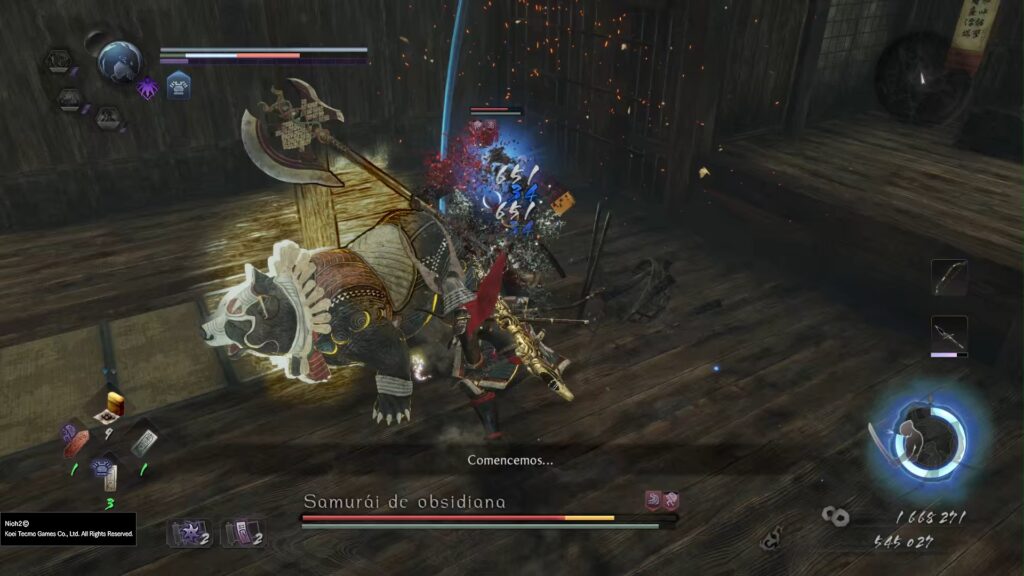
Is it more difficult to learn? Yes, this is your first Nioh will be a very high learning curve, more complex than the first game. However, the initial tutorial is more friendly and I recommend you very directly: pay too much attention to the tutorial so that your first mission is not a torture, because this is the biggest mistake players make, they do not learn from the tutorial.
The second mistake that happens more to veterans, especially players of other soulslike games, is that they think that Nioh is or should be played the same as other souls, and this is not so. If you think this is going to be the same as Dark Souls, you are going to fail. You must learn to adapt to what the game demands of you, and you will see that this applies not only in games, but in life.
En general, sigue siendo un gameplay sólido con nuevas mecánicas, pero en la práctica se siente idéntico al primer juego.
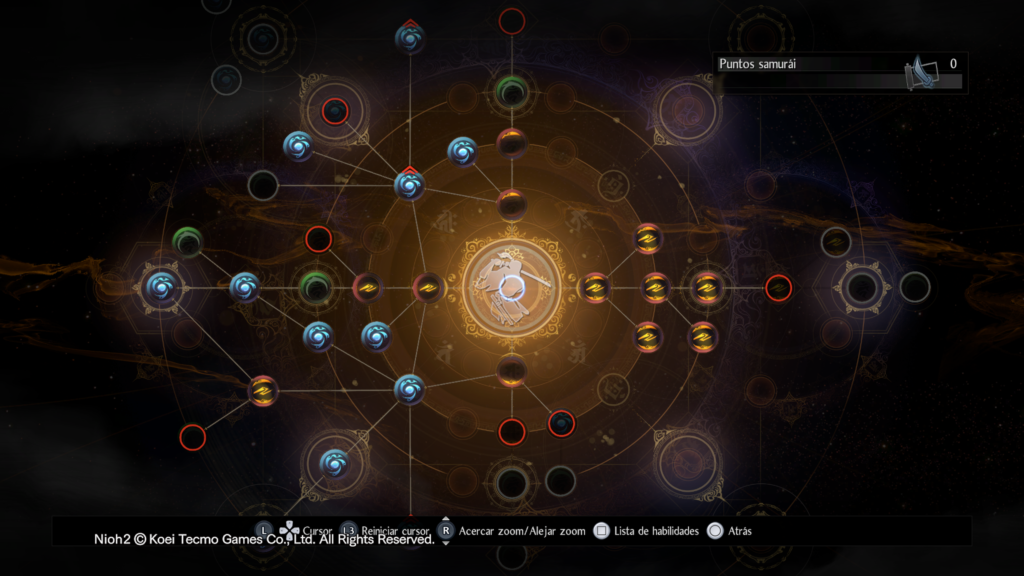
Complete list of bosses in the base game of Nioh 2 and my opinion of difficulty:
- Mezuki: A boss that is intimidating at first, but misses too many attacks, so it's not hard to dodge. I even had years of not playing Nioh and I was able to beat it the first time. I think it's more of a tutorial boss than anything else, I give it a 3 out of 10 difficulty.
- Enenra: This guy was too annoying for me, it took me 8 tries and he always beat me when he was low on life. I feel he has too much life for a starting boss and when he enters the dark world, it gets complicated because of the stamina recharge. You can use the pillars, which when you break them, water falls on him (his weakness). His design is very good and his combat was more complicated than I thought. I give it a 5 out of 10.
- Yatsu no Kami: I think this was the boss that put me in doubt if the game was going to live up to the first one, because I found it to be the second worst of the base game. His design is horrible, his combat is too boring and he has too much life, a bit poorly balanced. I beat him on the fourth try, but each try took me 10 minutes because of the times he attacked from afar and the mini snakes he sent. I've always insisted that when a boss resorts to small minions it's not a good boss. Luckily I went around the map and destroyed the statues that cause the poison pits, but otherwise I would even think the arena is poorly designed. A bad boss and complicated by design. I give it a 5 out of 10.
- Imagawa Yoshimoto: A human boss, I think one of the easiest, with simple and repetitive patterns. I beat him on the second time by just putting on a lightning Omamori and that's it, the combat becomes a gift. I give it a 2 out of 10.
- Kamaitachi: The arena is good and interesting. The boss is annoying because it doesn't stay still and you have to keep looking for it; when it attacks you quickly it tries to get away and it's complicated when it climbs trees. Its design is simple and it doesn't have much skill beyond having to chase it every time it runs away and wait for it to come down. I give it a 4 out of 10 difficulty.
- Azai Nagamasa: An honestly unmemorable boss, I beat him on the first try. Causes more damage and has a spawn infinite of the same attack over and over again, which can be annoying. Its design isn't great and its attacks aren't great either, I find it an unremarkable boss. I give it a 3 out of 10 difficulty.
- Tatarimokke: I beat him on my fifth try, an annoying owl even all over the map until I got to him. His combat, the only thing I didn't like was when he enters the dark world: it becomes a bit unfair, with slow stamina recharge, less vision of the scenery and some spheres shooting attacks at you. I thought it was an unnecessary way to complicate the combat. The boss itself is fine, the problem is its dark world. For me a 6 out of 10.
- Magara Naotaka: A very good boss, one of the best in the game that I enjoyed and I felt it was well balanced. Mostly fire attacks and ready, with a talisman of lazy you finish it easy. Its combat and artistic design seemed to me one of the best. I give it a 5 out of 10.
- Saika Magoichi: A disappointment. This boss is a copy and paste from the previous game, but now in an arena with no unfair fire. Really nothing remarkable about the combat and I find it unacceptable that a game repeats a boss from a previous title and doesn't make a really engaging change. I give it a 3 out of 10.
- Gyuki: It took me 2 tries. He misses a lot of attacks and sometimes it's hard for him to place you well. That said, one hit and he puts you in trouble. I think it's one of the bosses with a more distinctive arena than others, which sometimes repeat the same scenario. It doesn't have much to highlight: a big yokai that doesn't represent much of a challenge. I give it a 3 out of 10.
- Kasha: Considered one of the hardest in the game, I beat it on the first try. At first the mission was full of fire everywhere, so I assumed that the boss would be immune to fire, therefore, water was going to be his weakness, and so it was. Using talismans and water ninjutsus in a short time broke his stamina bar and caused him a lot of damage. Even so, it's a boss that even with minions didn't represent much of a challenge to me, it was very predictable and doesn't do that much damage. I did like its design and the combat as well. I give it a 4 out of 10.
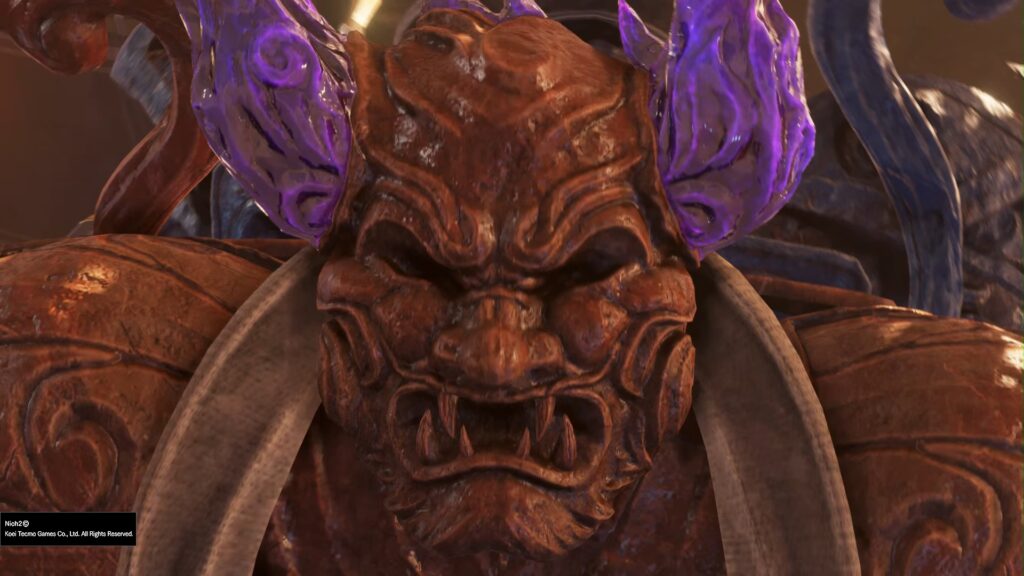
- Ryomen Sukuna: I loved this boss, I even used his soul core until the end of the game. I found it to be the best boss in the game because of its design, its path to him, the plot twist, the combat arena and its combo attacks, where depending on the face the attacks change, which I thought was amazing. It has a balanced difficulty, as you must know how to use varied water and fire attacks depending on the enemy's face. It took me 3 tries, but each one was very satisfying. I give it a 4 out of 10.
- Shibata Katsuie: I had read and seen in videos of tops that this boss was one of the hardest, however, I beat it on the second try. The combat arena I don't feel was well suited for the type of combat against this yokai because of its size and attacks. The fight is very good and has a backstory that gives meaning to the battle, once defeated you will know it. Maybe he was already over the recommended level. Despite having beaten him in 2 attempts, I consider him a 6 out of 10.
- Tokichiro: After seeing what he did, I had an incredible desire to beat him, the guy was already getting on my nerves, so I took it more personal. I beat him the second time. The important thing is the protection against lightning attacks, as it slows you down, so if you avoid that the combat becomes easier. There is a simple method with spear attacks, however, I don't see it necessary; it's not such a difficult boss that it forces you to use methods like that. I give it a 5 out of 10.
- Daidara Bocchi: The easiest fight, in my opinion, of all the yokai. In fact, a combat puzzle and button mashing than strategy. It's a big yokai only: destroy its crystals and victory is yours. I give it a 1 out of 10.
- Hachisuka Koroku: A corrupted ally in previous missions who decides to attack us, a character that I liked the times he came out. His combat is easy, like almost all the human ones. It doesn't change much compared to the others, more than a couple of attacks. With magic attacks it makes for a quick combat. I give him a 3 out of 10.
- Shuten Doji: Getting to him is the hardest part, the place is confusing. This yokai is summoned and painted as a powerful ancient yokai, but it didn't look like one. I defeated him the first time, his design is very good and the arena too. He's the typical slow boss but with brutal damage, he misses many attacks so dodging him isn't complicated either. I give him a 3 out of 10.
- Lady Osakabe: Welcome to the worst boss in the entire game. I can't say anything other than this is a copy of Nioh's final boss, Yamata no Orochi. Unoriginal, horrible combat design, super annoying and boring boss. This is one of those that I say whoever was in charge of designing it should be fired, because this boss was garbage. It took me like 7 tries until I knew I could use the cannon and shoot the main eye. I give it a 5 out of 10.
- Maeda Keiji: I admit I underestimated him on my first try. I feel like it's a mini boss, a common enemy with more life and damage. Nothing special and nothing remarkable. I give it a 2 out of 10.
- Tokichiro Yokai: Incredibly, I found this version easier than the human version. I managed to corner him in a corner of the map and it was easy to attack him. It combines a lot of the previous combat plus some additional details. Since we were looking for revenge, I wanted to defeat him even more. I didn't have to devise a strategy like the previous time. I give it a 5 out of 10.
- Kashin Koji: Finally, the guy we've been chasing, who doesn't stop possessing others, now shows his face. This guy lives by just possessing people. His combat is good and is 2 phases with 2 life bars, which is not very common in Nioh 2. I beat him on the third try and I think the most complicated thing is his dark world when he summons his clones. If you manage to beat the clones, the rest of the combat is easy. What makes it difficult is his clones, at that stage it gets complicated. In the second phase I used my guardian spirit and in a few attacks I lowered a lot of life just to finish him off. I give him a 6 out of 10.
- William: Yes, that's right: we fight against the protagonist of the first game, and the truth is I didn't even want to do it, maybe because of the affection I had for the character at the time, but no way. It's a simple combat, more of a nostalgic fight than a challenge. Here William feels more like a mini-boss than a real one; you don't even have to take down his whole life, since at a certain point a cinematic jumps out. I give it a 2 out of 10.
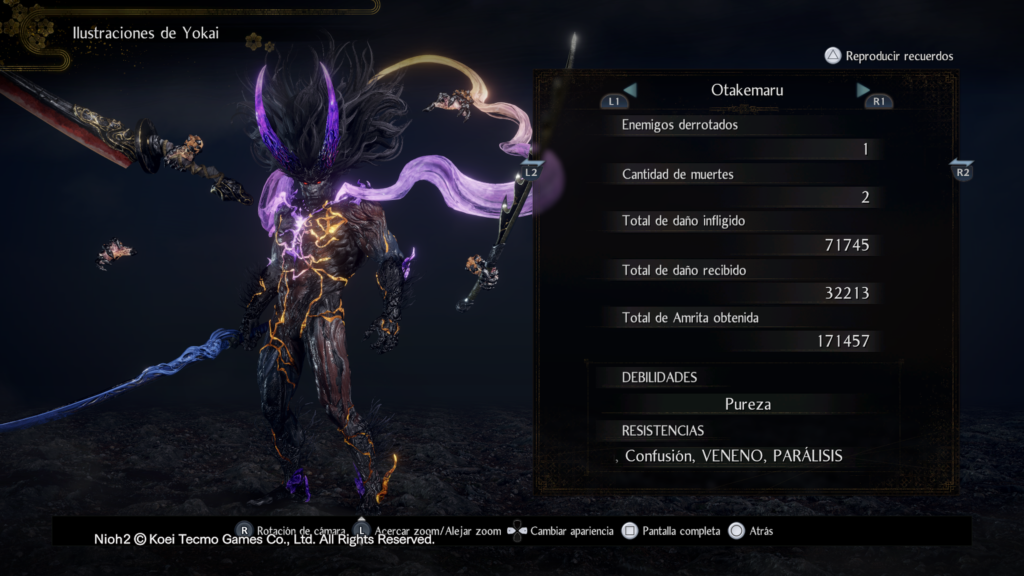
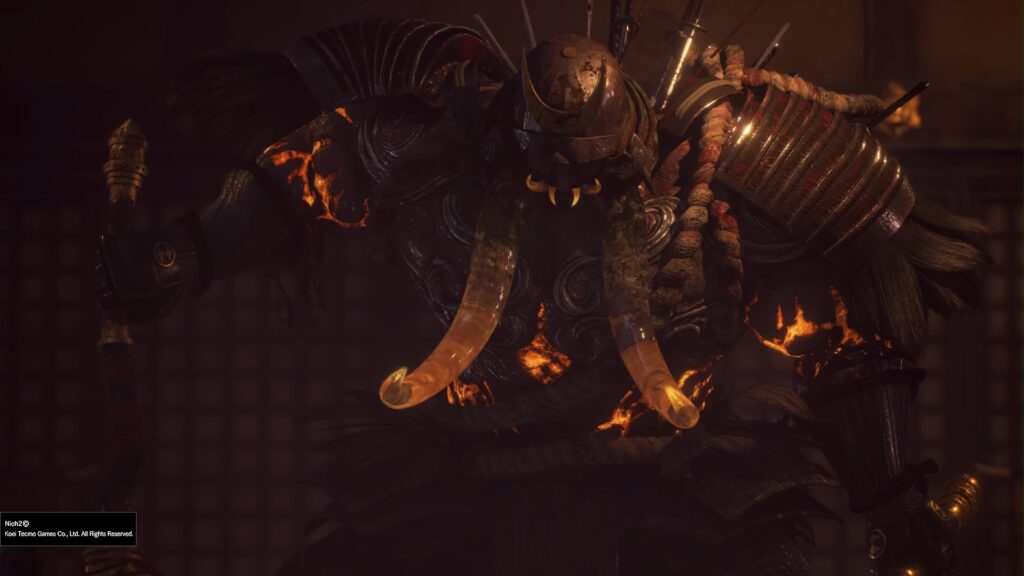
- Otakemaru: Undoubtedly the most difficult of the base game. Considered one of the 3 most powerful yokai in history, I must say they weren't kidding. I liked his combat and it puts you to the test. He uses different elemental attacks, the worst being lightning because of its effect. Its design is brutal and so is the combat area. I would have liked a deeper cinematic with this villain and not just a fight and that's it. Unlike the previous game, this one really is a well done and fairly challenging final boss. I don't remember how many tries I had, but I feel like in the end each one was a learning experience. I give it a 7 out of 10.
Graphics and visual design
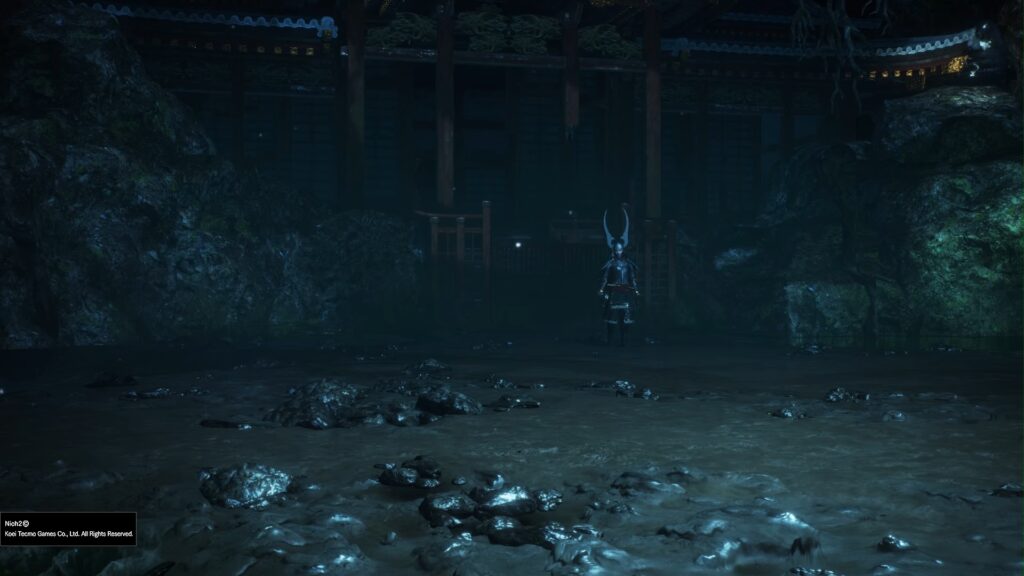
For the type of game it is, its graphic quality is very good. It has 4K, 60 fps and much more defined textures. The game is not open world or interconnected like the other Souls, but each mission is a different map; some of them are better than others and in general they are very linear, which does not represent a challenge to get lost, except for a couple that are confusing as a maze. If you ask me, I got lost several times on the Shuten Doji map.
On an artistic level the maps do feel of the period, but they don't stand out, they are not very visually appealing and throughout my experience there was no landscape or area worth admiring, which makes the maps lifeless and just a resource to get to an objective.
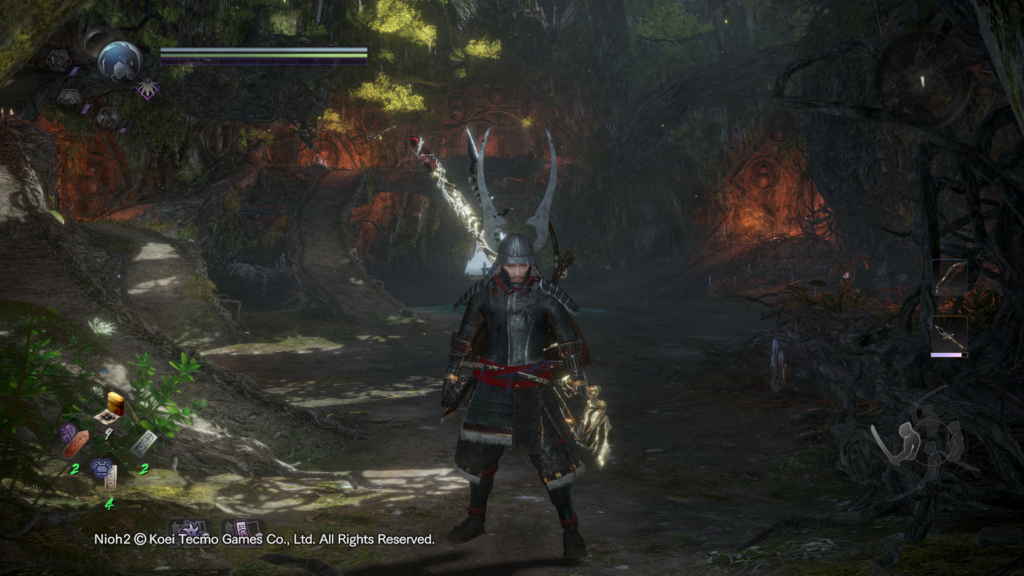
I think they improved the shortcuts and in general you understand what to do to advance in certain parts. Their style is known as dark realism and mythological, focused on Japan, with designs inspired by traditional art.
This is where the enemy and character design part comes in: the humans don't stand out much and the protagonist is left to the player's choice, the human bosses don't stand out either. I liked the guardian spirits and found them attractive, and who wouldn't love the yokai minions that accompany us with their adorable design? The designs of the new yokai that are incorporated are fine, though perhaps a couple of the bosses and the jellyfish (which is a deadly enemy) could have been better. The more advanced weapons I found much more appealing and I had a few that I kept using just for their design, even if they did less damage. I found the armor more appealing.
Compared to other games of its genre it competes very well; however, it does fall behind other studios that visually have more to offer in every sense: areas, enemies, bosses, weapons and so on.
Sound and music
The soundtrack is well adapted to the game and the battle environment, combining some epicness with traditional music of the time. The boss themes are very well done. I do consider that once again it adapts well, but its music is not very memorable: maybe if you listen to it through another medium you will remember it, however, it is one of those pieces that, if you don't hear it in a video or audio, you won't be able to reproduce it in your head. Perhaps the most memorable is the one on the loading screen every time you die, although it's not very pretty in my opinion.
The sound effects were improved, they play their role well, although they are very similar to the first game, with some improvements in quality and not so much variety. The voice acting is very good, now that Nioh 2 has more cinematics this section takes more strength and it does highlight, as always, the quality of Japanese voices, which help you to have a better atmosphere and are more in line with the personality of each of the characters. There are also English voices, but I sincerely recommend the original language for greater immersion.
Difficulty and accessibility
We know that this game is demanding, like all Souls-like, but more balanced than Nioh 1 without a doubt. In my case it was easier than the previous one and I say this for two reasons.
Reasons: Nioh 2 is practically the same as the previous game in almost everything, there are not many changes beyond more mechanics and combat aids, and those new
mechanics make the game much easier if you learn them. The other reason is that I had already suffered with Nioh 1, so I just had to remember my strategies from the first game and use them in this one; that's why I say that the game is almost the same, because it didn't force me to play differently or think differently in combat. If you played 1, this one will feel easier as long as you learn the new mechanics.
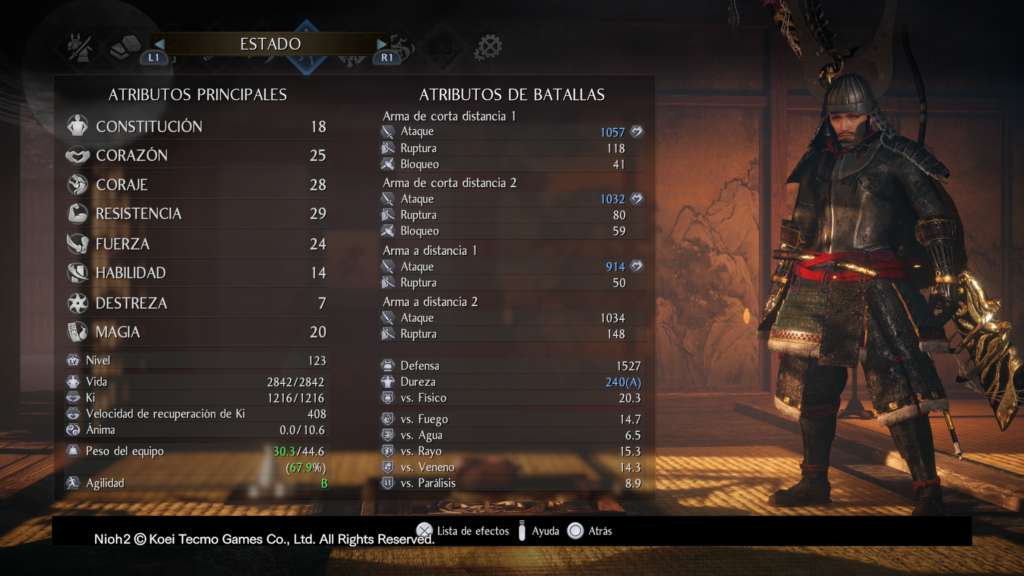
Besides, there are many ways to become OP. I personally used the same build and strategy of the first game: heavy armor, spear for medium range attacks, bows and rifles, and omyo magic. That combo you upgrade it to the max and that's it, you pass the game. Of course, some areas can feel unfair because of the amount of simultaneous enemies, so it's better to separate the enemies one by one and your experience will be slower, but you'll die much less.
As for accessibility, it is very limited. It is not a game suitable for many people, neither in mechanics nor in difficulty, and its menus are loaded with information, which can be overwhelming or even intimidating, because you will ask yourself: “Do I really have to learn all this? And the answer is more yes than no.
Additional content
The duration of the campaign is 35-50 hours in the base game. It can reach 100+ with side quests, NG+ and DLCs perfectly. The game has 24 main missions divided into 6 regions. You can really get through them fast because avoiding enemies is very easy, but it's worth your time to explore, mostly at the beginning. So exploring a mission and completing it can take you from 1 to 2 hours.
Nioh 2 has a high replayability because to fully improve the character you must invest hundreds of hours of farming or new games, in addition to that
offers several missions. One of the game's problems, just like the previous game, is its side quests, which again feel like filler and unoriginal, except for a few. Many consist of defeating a secondary boss (some even repeated from the previous game, which I found terrible) or finding some item on the map that is usually found near the end. There are good missions, but others are not and fall into the same repetitiveness of the previous game. I think the side missions were not improved, but followed the same line.
The Dojo missions are maintained, but as in Nioh, you need to use all the weapons for hours to unlock these missions, which will require a lot of time and effort.
which is a heavy and tedious task. They offer good rewards, but in exchange for a high number of hours.
Twilight missions keep their essence, which could have been different in this game, but it wasn't. They are the same as a mission you already completed, but more difficult. They are the same as a mission you already completed, but more difficult. The worst thing is that the game decides which one you can play and which one you cannot. That is to say, per real day you can only play 2 of these missions that the game chooses randomly, and if by chance you had already played one and it appears again, you must wait another day for others that you have not played to appear. It is a nefarious, tedious and unnecessary system that forces the player to be aware of which mission comes out today, which one tomorrow and so on. This already happened in Nioh and it was tiring because you had to wait days for a mission you hadn't played, and Nioh 2 falls into the same problem.
I played for over 60 hours and, on a multiplayer level, it wasn't bad. It still offers hidden tea elements, which is so to speak joining a clan and earning clan points. Personally I didn't find it appealing and focus more on the single player experience. I tried summoning someone and yes, you have to be patient to get a stranger to help you on a quest. It has taken me up to 20 minutes to find a helper, but it's faster if you help someone.
The game has 3 DLC: The Tengu's Disciple, Darkness in the Capital and The First Samurai. If you buy the full version, you get them all; otherwise you have to buy them separately. According to what I have seen, they are well accepted by the community. In my case I haven't bought them, but if you've played a lot of Nioh 2 then it's worth giving them a try.
Technical Aspects
In terms of performance, I found it excellent. I've played it on PS5 and it runs smoothly, and I've seen the same on PC even with many enemies on screen. Perhaps on some occasions my PS5 made some noises that I noticed in certain parts of the menu, in the part of changing weapon cores: every time I changed the guide video it made a different noise. However, it's nothing unbearable, you only notice it if your environment is very quiet.
I saw very few bugs, it is a game that in my experience was very good, with good screen loading times and considerably improved graphics compared to the original version of PS4. One point to improve is that several times I was disconnected servers and went to offline mode when really my connection was fine. The connection of the games can be improved; however, in combat I had no lag or other problems.
Value for money
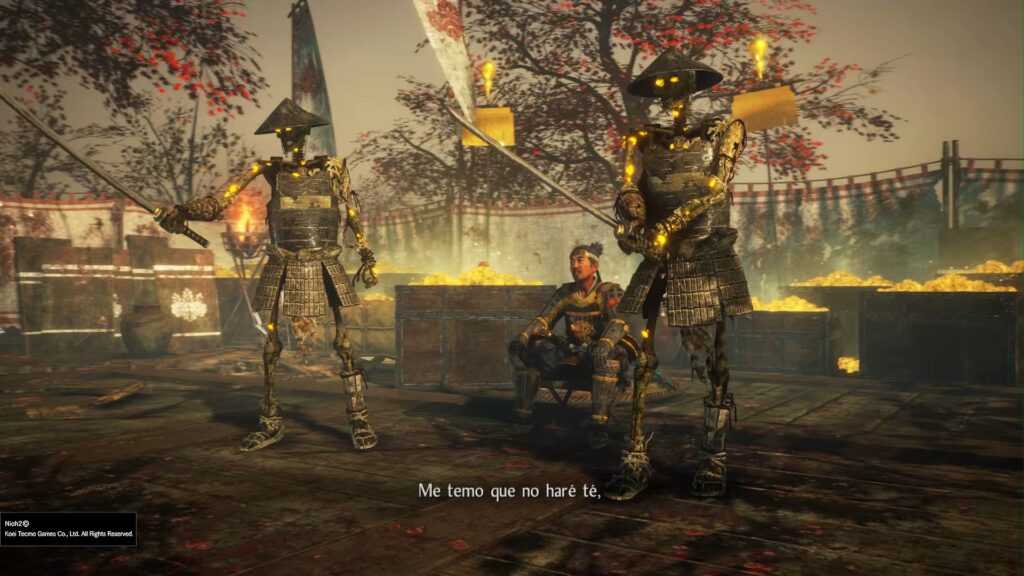
The launch price was $60, which is fine considering what it offers. It doesn't seem like a bad starting price to me; however, analyzing all the points, yes it is a bargain game. In my case I got it thanks to the PS Plus subscription, but I was planning to buy it at around 30 dollars. The campaign is worth it and it does take its fair share of time, but its problem is still the secondary content, which I don't feel is worth it due to its repetitiveness and little relevance. Sometimes it feels like they divide teams: some are in charge of the main missions and others of the secondary ones.
I understand smaller studios resorting to this; however, I was expecting a significant improvement in additional campaign content and saw the same trend as Nioh 1. Which is why $60 is fine if you're going for 100%; if you're just going for the campaign, I wouldn't recommend paying more than $30 for the game.
Trophies / Achievements
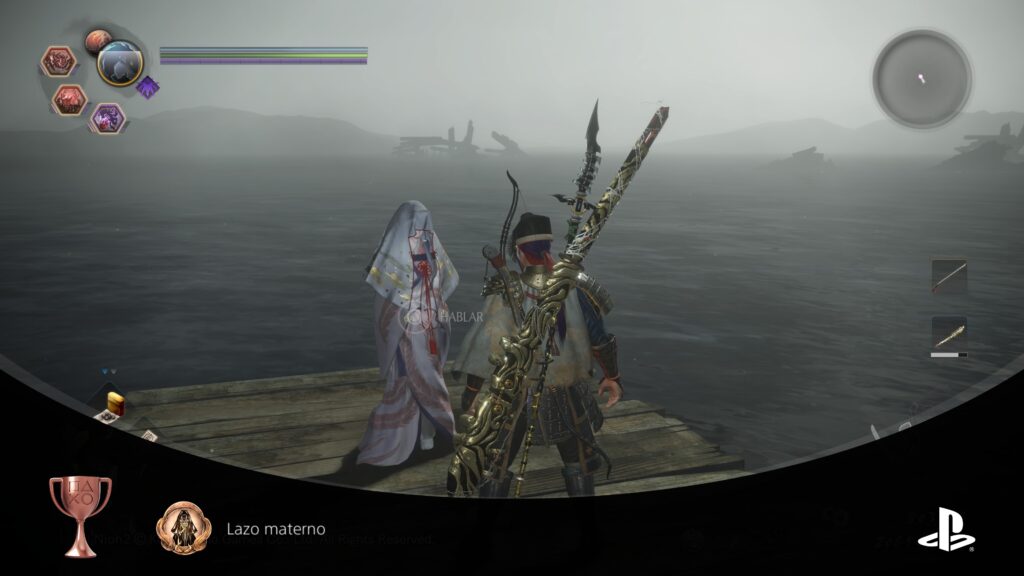
- Platinum obtained: No
- Percentage of trophies: 62% excluding DLC.
- Estimated time: 80-120 hours
- Platinum difficulty: 5 out of 10. I found the platinum easier than Nioh, for many reasons: You don't have to complete all the twilight missions, after an update they lowered the amount of points needed to master each weapon which simplifies a lot the trophies, the game has more mechanics I feel it's easier and there are several missions where you are accompanied, besides being able to summon people from outside with the ochoko cups and summon npcs makes it easier. I think that the platinum is more of dedicating several hours than really something of skill.
Conclusion
Nioh 2 Remastered takes all the good things from the first game and improves in some aspects. It maintains an adequate difficulty level, intense combat, good atmosphere and a deeper and better explained story. Although it does not improve in other aspects of its previous version, such as secondary missions, soundtrack, some designs and incorporates little in the gameplay, makes it feel very identical to the first even feeling sometimes that it is a DLC of Nioh 1. If I consider that Nioh 2 is left behind the initial proposal of Nioh 1, although I also consider that if you are a lover of this genre is still a must-play game.
My final rating for Nioh 2 Remastered is:
3.9/5

